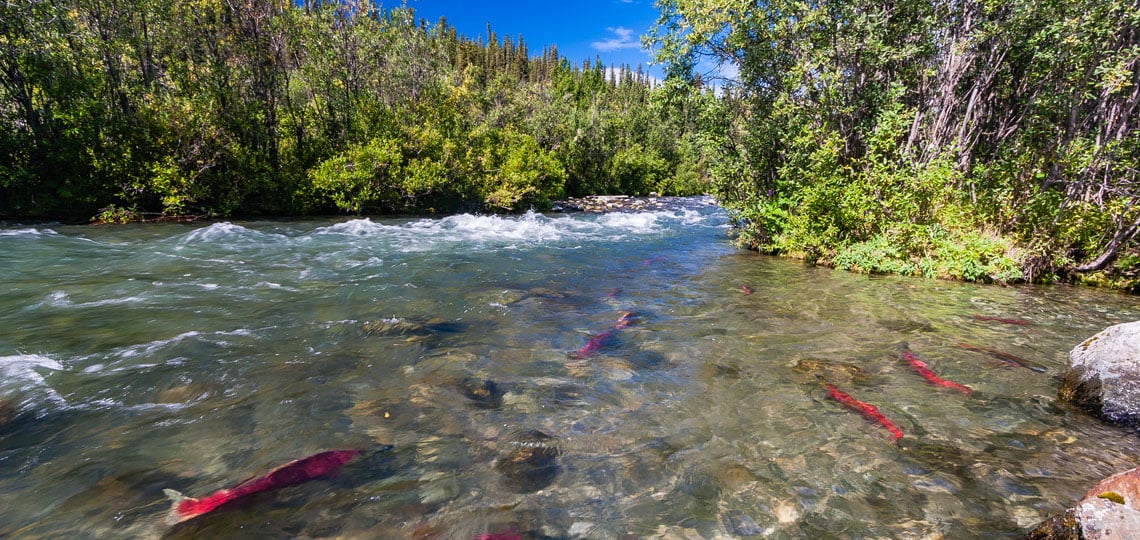
Over Fishing
Pacific salmon are facing serious pressure from human activities long before changes in their migration timing and body size become noticeable. These pressures are disrupting their natural life cycle and weakening the health of their populations.
One major issue is overfishing. Commercial fishing often targets the biggest salmon, which means fewer large, healthy fish are left to reproduce. Over time, this leads to a population made up of smaller fish, even before any evolutionary change begins.
Another major factor is climate change. Rising water temperatures in both rivers and oceans are affecting the timing of salmon development, their food supply, and their ability to survive in the ocean. For example, warmer water holds less oxygen, which can stress salmon and make it harder for them to grow and return to spawn.
Hatchery practices are also a concern. Hatcheries are designed to raise salmon in controlled environments to increase fish populations. However, these hatchery-raised salmon often don’t face the same challenges as wild ones. This can lead to fish that are less adapted to survive in the wild, and when they breed with wild salmon, they may pass on weaker traits.
All of these human-driven factors are putting pressure on salmon populations even before any physical or behavioral changes, like smaller size or earlier migration, become permanent. If these pressures continue, they can trigger long-term evolutionary changes that are difficult to reverse.